
4
Years Of Experience
Facilities Built for Safety and Long-Term Function
Horse Barn Construction in Warrenton for properties needing livestock housing designed around ventilation, drainage, and structural strength
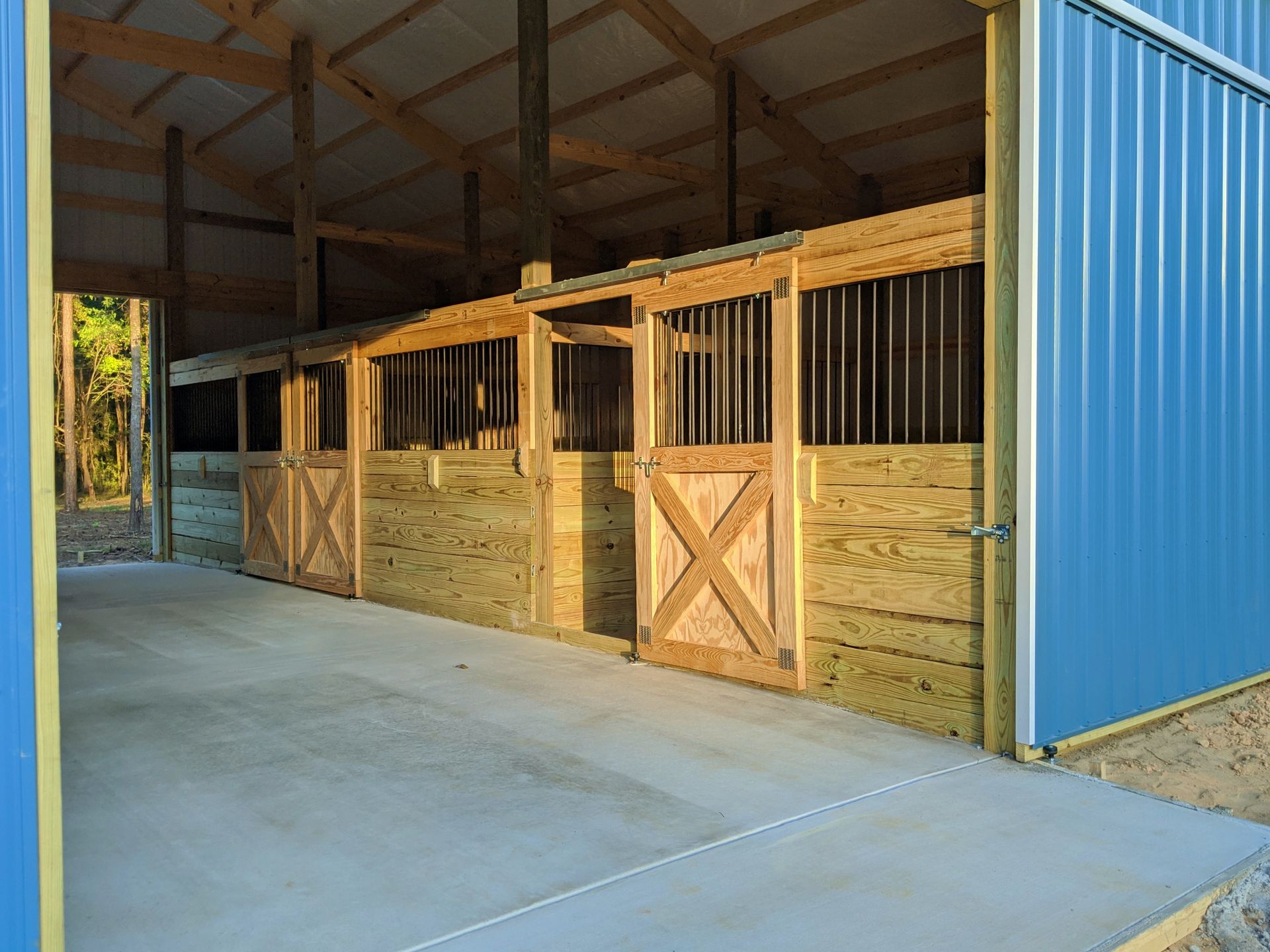
Campbell's Carpentry handles horse barn construction in Warrenton with layouts planned around stall spacing, tack room access, aisle width, and controlled airflow that prevents moisture buildup and respiratory issues. The construction addresses how horses move through the structure, where equipment is stored, and how water drains away from high-traffic areas to prevent footing degradation. Barn owners notice improved daily workflow, reduced maintenance on stall flooring, and better air quality when the layout accounts for actual use patterns rather than generic agricultural templates.
The work involves foundation placement that manages water flow, framing that supports wide spans without mid-aisle posts, and roof systems that exhaust heat while shedding snow and debris. Decisions around door placement, ventilation opening size, and flooring slope determine how well the barn performs in cold winters and humid summers common to this region.
Schedule a property evaluation to review site drainage, access routes, and layout options for your specific acreage and use requirements.
What Proper Barn Layout Requires
Construction begins with site grading to direct water away from stall areas and entry points, followed by foundation work that prevents settling under load-bearing walls and heavy equipment traffic. Stall dimensions are set based on horse size and turnover frequency, with tack room placement determined by workflow between grooming, storage, and turnout areas. Aisle width must accommodate equipment movement while maintaining structural support, and ventilation openings are positioned to create cross-flow without creating drafts directly on stalled animals.
After completion, you see consistent airflow that reduces condensation on walls and rafters, drainage that keeps aisles and stall entries dry during rain, and door systems that operate smoothly under frequent use without binding or warping. Flooring remains stable because the foundation accounts for freeze-thaw cycles and the load distribution from stall mats and bedding materials.
Cost depends on stall count, roof material choice between metal and shingle, concrete placement for wash bays or feed rooms, and insulation if the barn includes heated spaces. Upgrades like cupolas for additional ventilation, loft storage with load-rated flooring, or rubber stall mats integrated during construction affect total investment but also reduce long-term upkeep and replacement frequency.
What Owners Ask Before Building
Horse barn projects in Warrenton often involve questions about site conditions, material durability, and layout decisions that affect how the facility functions over decades of daily use.
What site conditions affect foundation and drainage design?
Soil composition, slope grade, and proximity to natural drainage paths determine whether the foundation requires additional gravel base, perimeter drains, or grading adjustments to prevent water intrusion into stall areas.
How is ventilation planned to prevent moisture buildup?
Ventilation design balances ridge vents, eave openings, and gable vents to create air movement that exhausts ammonia and humidity without creating wind tunnels that stress animals or blow bedding into aisles.
What factors determine stall and aisle dimensions?
Stall size depends on horse breed and whether animals stay stalled long-term or use stalls only for feeding and grooming, while aisle width must allow tractor access for bedding delivery and manure removal without risking wall damage.
When should metal roofing be chosen over shingles?
Metal roofing handles snow load better, sheds debris from overhanging trees, and lasts longer in high-moisture environments, making it cost-effective for barns expected to serve multiple decades without re-roofing.
What construction details reduce long-term maintenance?
Properly sized overhangs protect wall siding from rain splash, treated lumber in ground-contact areas resists rot, and hardware rated for outdoor exposure prevents rust on hinges and latches that see constant use.
Campbell's Carpentry plans barn construction around site-specific drainage, functional layout, and material choices that hold up under livestock use and Warrenton weather conditions. Request an on-site consultation to discuss stall configuration, ventilation requirements, and foundation planning for your property.