4
Years Of Experience
Buildings That Handle Heavy Use Efficiently
Pole Barn Construction in Warrenton for properties needing workshop, storage, or garage space
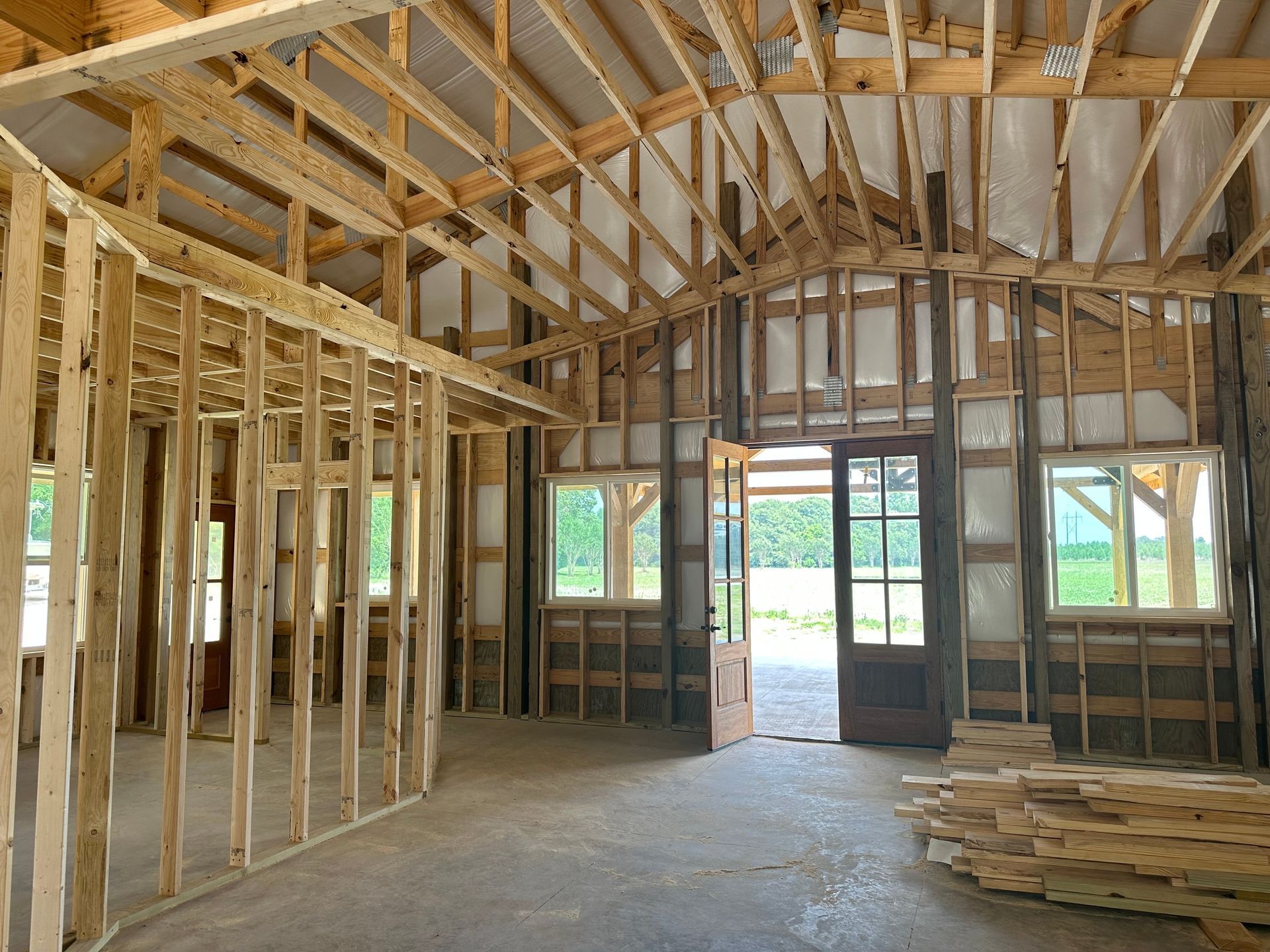
When you need a large, clear-span building without load-bearing interior walls, pole barn construction solves the space problem faster and more affordably than traditional stick framing. Campbell's Carpentry builds post frame structures in Warrenton using embedded posts that transfer loads directly into the ground, eliminating the need for continuous perimeter foundations and reducing both material costs and construction time. You're looking at buildings designed for vehicle storage, workshop operations, equipment protection, or agricultural use where open floor space and quick access matter more than finished interior aesthetics.
The build starts with site preparation and post hole excavation, followed by setting treated posts in concrete, installing horizontal girts and roof trusses, then adding metal roofing and siding. Concrete floor slabs are optional and installed after the structure is enclosed, giving you flexibility to stage costs or leave certain areas as compacted gravel depending on intended use.
Request an on-site assessment to evaluate soil conditions and discuss size requirements for your intended use..
How Post Frame Construction Cuts Build Time
Post frame methods use fewer individual components than conventional framing, which speeds installation and reduces labor hours. Treated posts are set at intervals determined by engineering requirements, then horizontal girts span between posts to support metal siding and create the wall structure. Roof trusses attach directly to the post framework, and the entire assembly relies on engineered connections rather than continuous stud walls—this approach creates wide-open interior space without columns or interior supports interrupting the floor plan.
Once complete, you notice unobstructed floor space that accommodates large equipment, vehicles, or material storage without working around structural walls. The metal roof sheds water immediately, and the exterior requires minimal maintenance compared to wood siding that needs periodic painting. Insulation can be added between girts if you plan to heat the space or need temperature control for stored items.
Cost depends on building dimensions, roof pitch, insulation requirements, concrete slab inclusion, and door configurations—a basic uninsulated storage building costs significantly less than an insulated workshop with overhead doors, windows, and finished concrete floors. Pole barns suit situations where you need maximum square footage per dollar, where construction speed matters, or where future expansion might require adding onto the existing structure.
Common Questions About Pole Barn Projects
Property owners in Warrenton considering post frame buildings typically ask about structural differences, cost factors, and best use cases before committing to construction.
What makes pole barn construction faster than traditional framing?
The post-and-girt system uses fewer pieces and simpler connections than stud-wall framing, and the lack of a continuous perimeter foundation eliminates the time required for forming, pouring, and curing concrete along the entire building footprint.
How does soil condition affect post frame installation?
Clay-heavy soils in parts of Warrenton require deeper post embedment and larger concrete footings to prevent frost heave and settling, while well-draining gravel soils allow standard depth installations with less concrete volume.
Why choose a pole barn over a stick-built garage?
Pole barns cost less per square foot, build faster, and provide uninterrupted interior space ideal for vehicle storage or workshop layouts—you sacrifice interior finish options and insulation efficiency compared to conventionally framed structures.
What insulation options work in post frame buildings?
Fiberglass batts fit between girts, spray foam seals gaps and provides higher R-value, and rigid foam panels attach to the interior of the metal siding—your choice depends on whether you're heating the space year-round or just reducing temperature swings.
When should I add a concrete floor versus leaving it gravel?
Concrete makes sense for workshop use, vehicle maintenance, or any activity requiring a clean, level surface—gravel works for equipment storage, hay barns, or situations where drainage through the floor benefits the use case.
Campbell's Carpentry designs pole barn projects based on your specific storage, workspace, or agricultural needs. Set up a consultation to review building dimensions, door placements, and insulation requirements for your property.